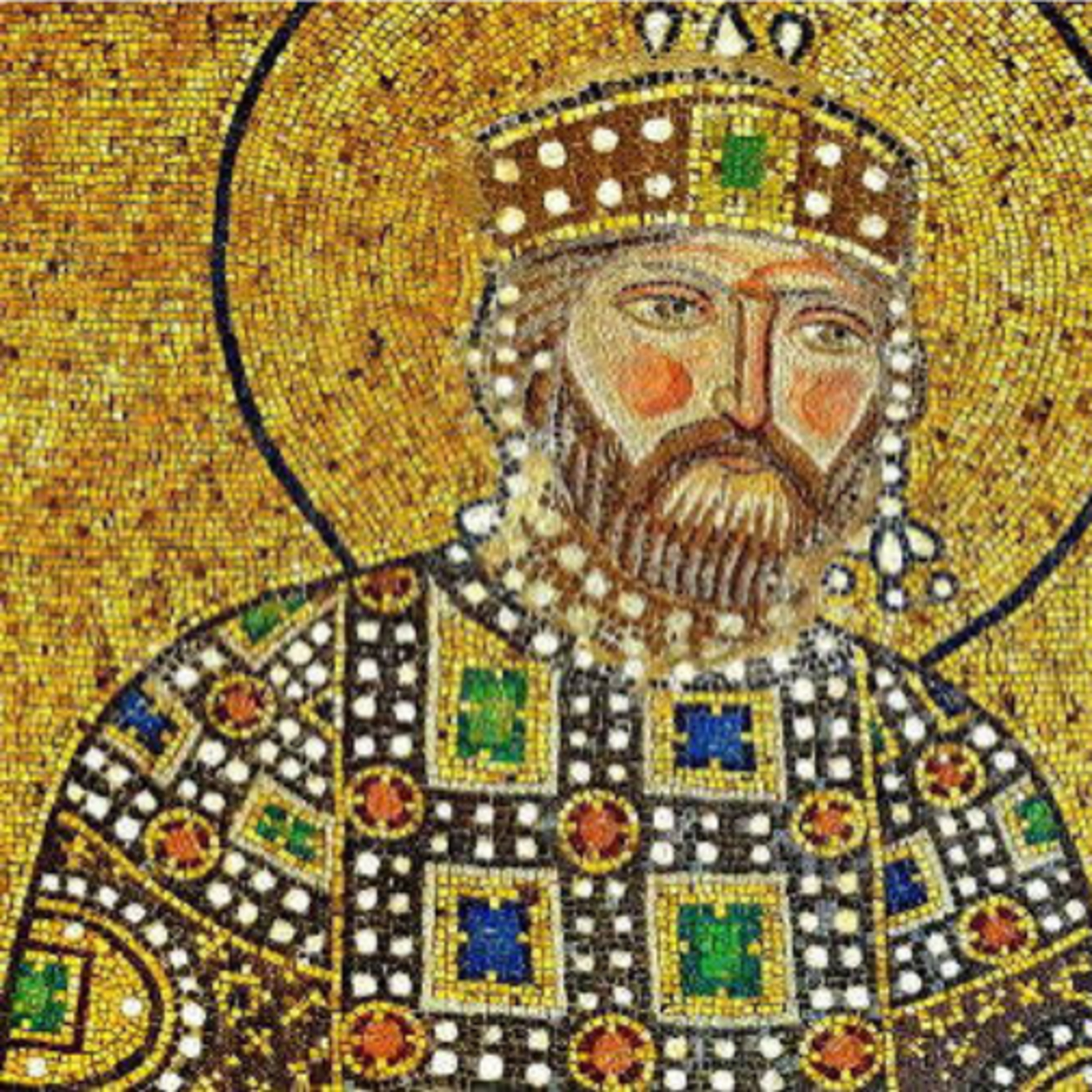
Justinian the First & the Nica Riots
The Nika Riots of 532 AD stand as the most violent outbreak of civil unrest in the history of Constantinople, threatening to topple the Byzantine Empire at its peak. What …
The Byzantine administration operated as a absolute theocracy where state and church were inextricably linked under the principle of symfonia. The Emperor, viewed as God’s supreme representative on earth, held …
The Byzantine Empire had no strictly codified succession laws. Instead, legitimacy derived from a blend of dynastic inheritance, military backing, and imperial consensus. Rulers secured the throne by being appointed …
Empress Theodora rose from humble beginnings as an actress and dancer to become one of the most powerful and influential rulers in the Byzantine Empire. Co-ruling with her husband, Emperor …
The Byzantine Empire excelled at siege warfare and defensive architecture, particularly through the use of the traction trebuchet. This artillery piece used human crews pulling ropes to launch heavy stones …
The Byzantine navy dominated the Mediterranean using Greek Fire, a devastating petroleum-based incendiary mixture. Launched from specialized dromon warships using pressurized bronze tubes called siphons, the liquid ignited upon contact …
The long downfall of the Byzantine Empire was a slow, agonizing decline that stretched over several centuries, driven by relentless external pressures and deep-seated internal decay. Once a dominant superpower, …
While daily life for most women in the Byzantine Empire was largely confined to the domestic sphere and highly segregated, Byzantine law granted them surprisingly advanced legal rights compared to …
The Twenty Years' Anarchy (695–717 AD) was a period of severe political instability that nearly destroyed the Byzantine Empire. Triggered by the deposition and mutilation of Emperor Justinian II, this …
Byzantine emperors ultimately doomed their empire through a lethal combination of chronic civil wars, aggressive overspending, and reliance on foreign mercenaries. Instead of uniting against external threats, rival rulers routinely …
The moniker "the Terrible" is a flawed translation of the Russian word Grozny (Грозный), which actually means "Formidable" or "Inspiring Awe."While he was a brutal ruler, his violence matched the …
This episode explores how invasions, wars, foreign pressures, and geopolitical challenges shaped the development of Russia’s political system and examines key historical events from the Mongol period to modern conflicts. …
Build your own in under 5 minutes. Preview before you sign up — no credit card needed.
Create your free site →